About this dieline
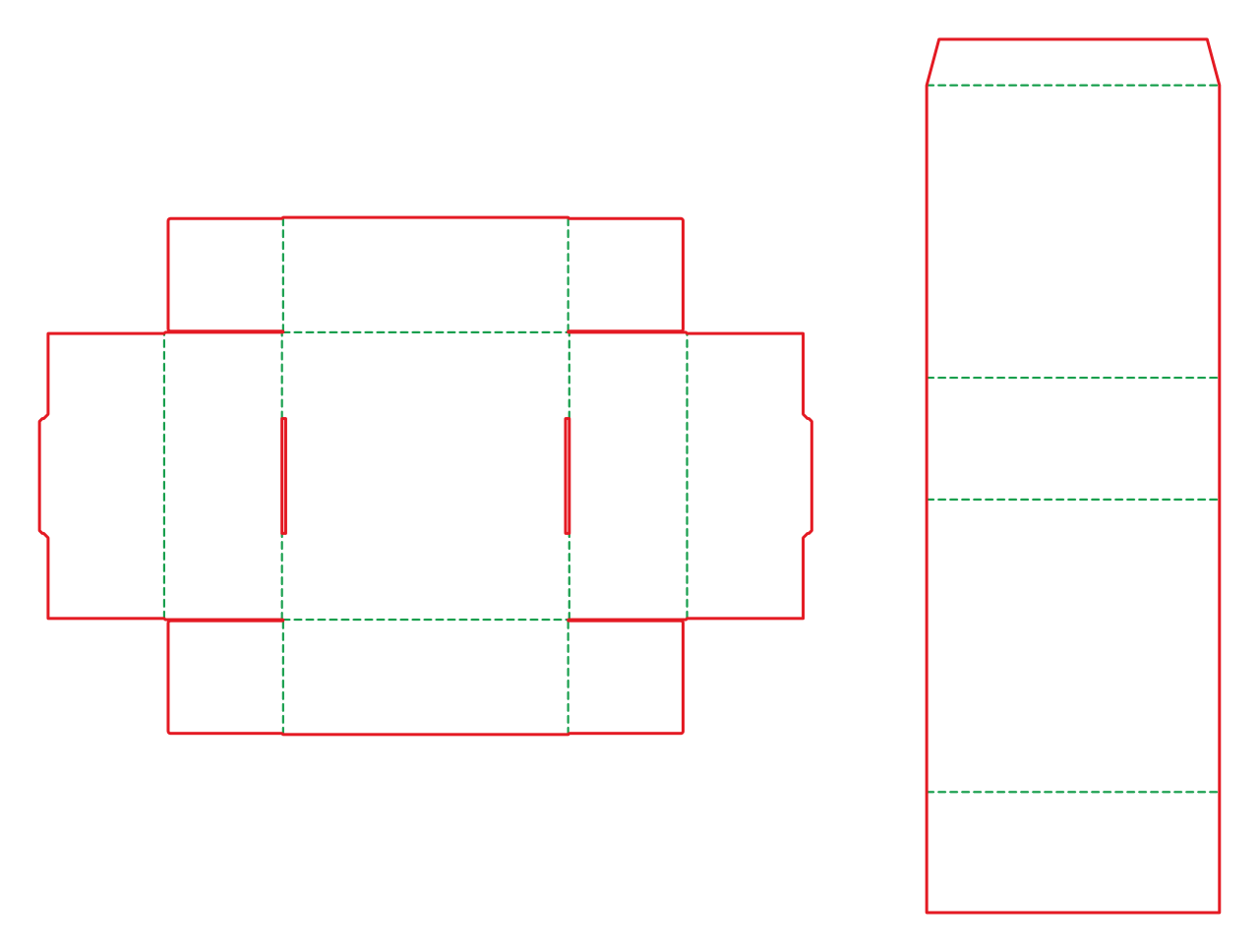
A drawer box is a tray that slides out of a sleeve, like a matchbox. It turns a small gift, jewellery or a candle into something to open slowly. The tray's two ends fold over double and lock into slots in the floor with small tongues, so it needs no glue; the sleeve is one strip of board glued along one edge.
Enter the length, width and height of the tray and the board thickness, and download one PDF with the tray and the sleeve. The sleeve is sized from the tray and the board, so the drawer slides without forcing and without rattling.
Common stock tray sizes, length × width × height: about 65 × 65 × 30 mm for rings or earrings, 100 × 70 × 30 mm for a soap bar or a deck of cards, 106 × 35 × 35 mm for a lipstick or a pen and 150 × 100 × 40 mm for a phone-sized gadget. 100 × 100 × 40 mm (4 × 4 × 1½ in) is the one size two different sellers both list. Length is the way the tray slides out; leave a few millimetres around the product on every side.
How much bigger is the sleeve?
Just enough for the tray to slide: about two board thicknesses wider and three and a half higher than the tray, plus 1 mm of play, and a little longer so the tray's end sits just inside. Thicker board makes a bigger sleeve automatically.
Is the size inside or outside the box?
Crease to crease, the size of the tray the way box makers quote it. The clear space inside is a little smaller. Check the allowances with your printer, or print one at 1:1 and fold it first.
Which board suits a drawer box?
Thin paperboard, 0.4 mm, is the default — what stock drawer boxes are made of, easy to fold and to print. A bigger or heavier box wants F or E flute; the sleeve grows with the board so the tray still slides.
Is there a thumb notch?
No. The sleeve is a plain tube, open at both ends, so you open the drawer by pushing the tray out from the other end.
Drawer box sizes: tray-and-sleeve boxes, jewellery to gift sets →