About this dieline
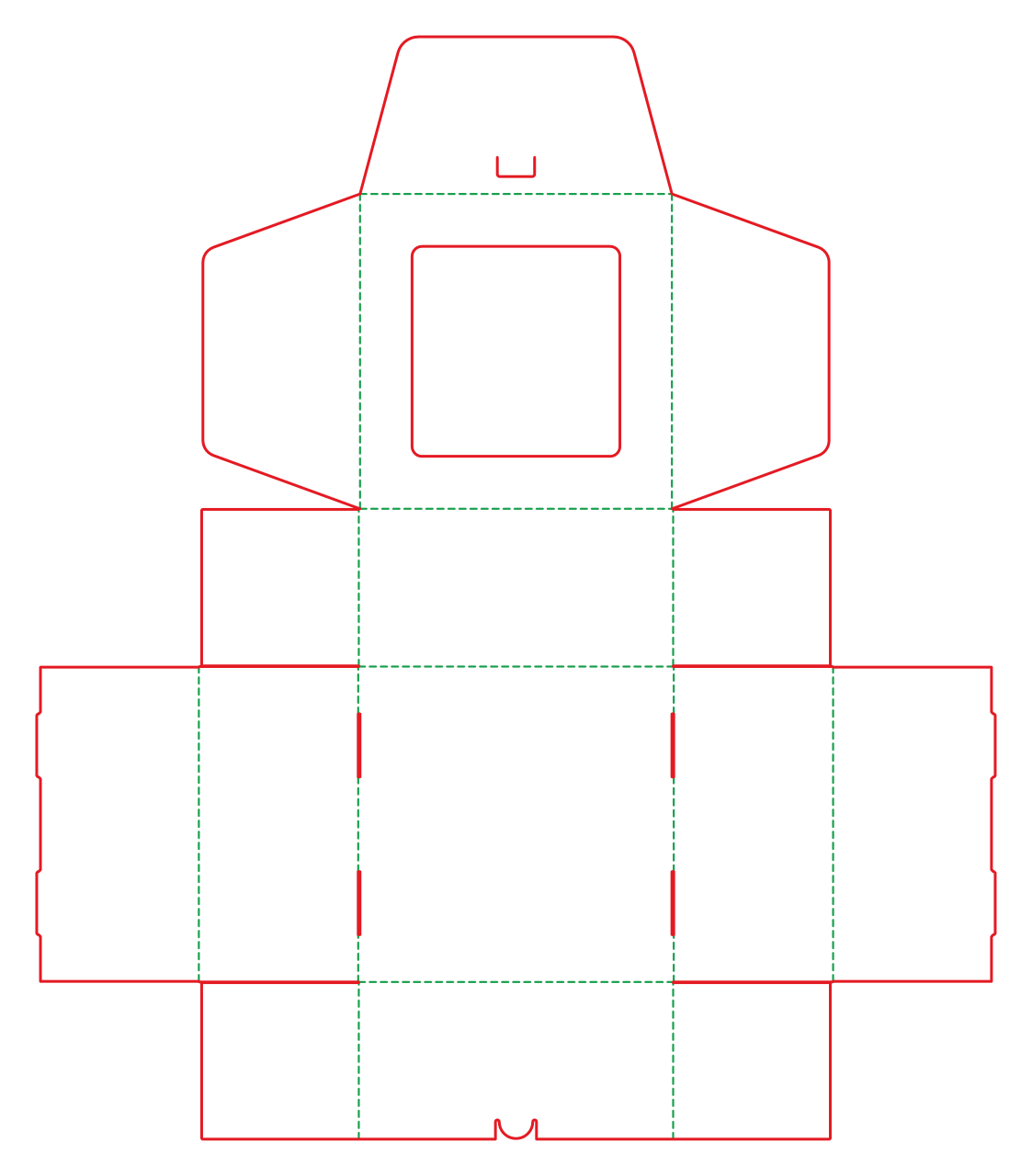
A cake box is the white bakery box with a lid that folds over from the back and tucks in at the front, often with a window to show the cake. It is one sheet of board: the ends fold over double and lock into slots in the floor, and a round tab in the front wall catches the lid's tuck, so it needs no glue or tape.
Enter the length, width and height of the box and the board thickness, choose whether the lid has a window, and download a print-ready PDF. The lid is sized from the box and the board, so it closes flat between the ends.
Common stock sizes, length × width × height: about 114 × 114 × 114 mm for a few cupcakes, 203 × 127 × 76 mm for pastries or a loaf, 229 × 229 × 127 mm for a medium cake, 356 × 254 × 102 mm for a quarter sheet cake and 483 × 356 × 102 mm for a big sheet cake. Measure the cake board rather than the cake, with a little room to lift it out. For the height, take the tallest point, decorations included, plus a few millimetres so the lid stays off the icing.
How big is the window?
Two thirds of the lid each way, centred, with rounded corners. Glue a clear film behind it, or untick Window for a plain lid.
Is the size inside or outside the box?
Crease to crease, the way box makers quote it: a 10 × 10 × 5 in cake box is 254 × 254 × 127 mm here. The clear space inside is a little smaller. Check the allowances with your printer, or print one at 1:1 and fold it first.
Which way does the lid open?
Across the width: it is hinged on the back wall and tucks in at the front. So the length is the side along the hinge — enter the longer side there for a sheet cake.
What board is a cake box made from?
Thin white paperboard; the default here is 0.5 mm. A heavy or large cake wants F or E flute. The floor stays the size you enter, and the lid gets a little smaller with thicker board so it still closes between the ends.
Cake box sizes: bakery boxes from cupcakes to sheet cakes →